Elderberry Cold & Flu Syrup: What Research Says
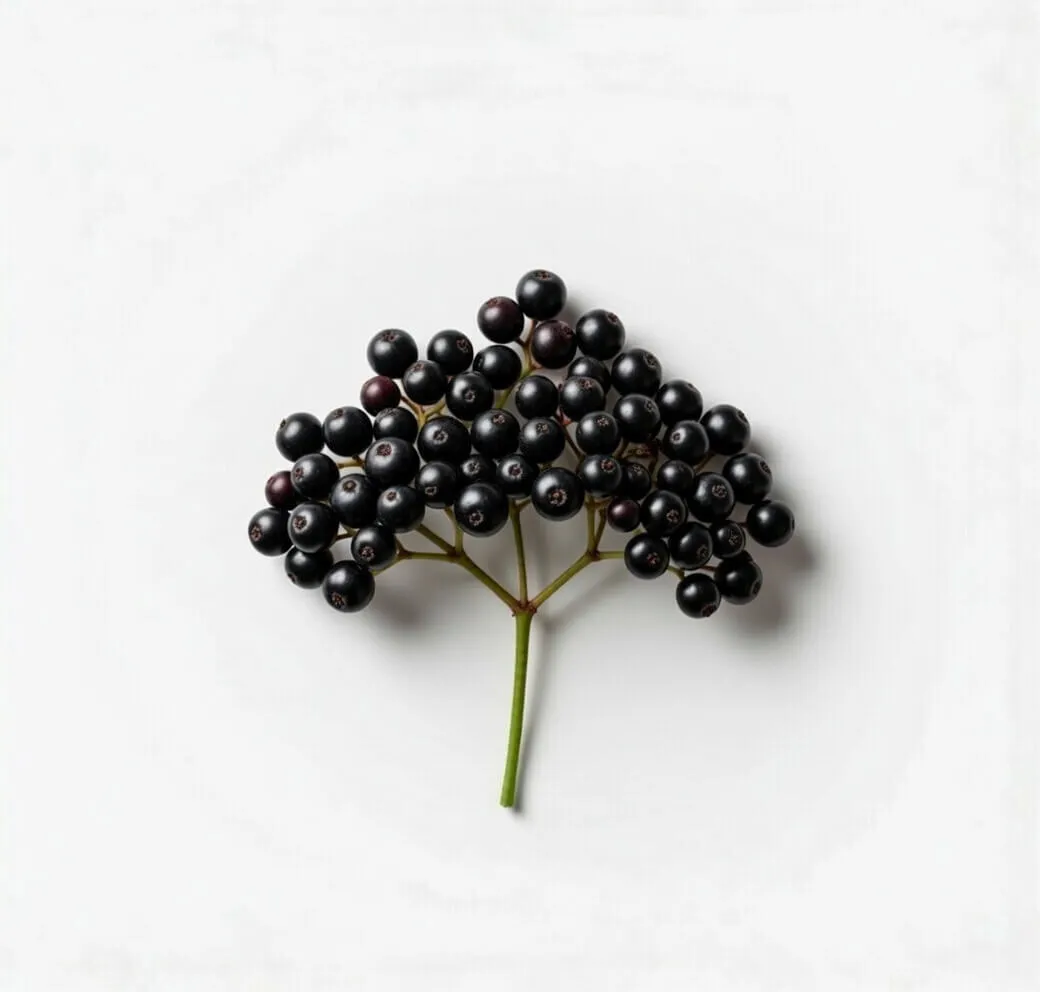
Elderberry comes from the elder tree, and its dark purple berries have been valued in folk medicine for centuries. Today they most often reach the kitchen as a syrup — cooked berries, water and honey — reached for when the season turns and everyone around you starts sniffling. Here is what the research says, how to make a batch, and where to be careful.
It fits naturally into the Immune Support corner of the pantry: elderberry is rich in antioxidants, vitamin C and flavonoids, and is traditionally used to support immune system function during seasonal challenges.
What the Research Suggests
The clearest summary is a meta-analysis by Hawkins et al., published in Complement Ther Med in 2019, drawing on 4 randomized studies. It found that elderberry supplementation substantially reduced upper respiratory symptoms and shortened the duration of cold and flu by an average of 2 days.
Part of the interest lies in the berries themselves. A cup of elderberries supplies 52 mg of vitamin C — 87% of the daily value — along with vitamin A and anthocyanins, the pigments behind that deep colour. Those anthocyanins have demonstrated direct antiviral activity against influenza viruses.
On this site the evidence for elderberry syrup is rated Strong, based on that meta-analysis. It helps to keep the scope in view: the finding is about easing upper respiratory symptoms and shortening how long they last, and it fits the traditional use of elderberry for immune support during seasonal challenges.
Making Your Own Syrup
The preparation is simple. Simmer 1 cup of dried elderberries in 3 cups of water for 45 minutes. Strain, cool slightly, then stir in 1 cup of raw honey. Store it in the fridge and use it within 3 months.
Cooking is not optional. Raw elderberries should never be consumed — they must be cooked first, whether you are making a syrup, a tea or using a supplement.
How Much to Take
For adults, the guidance here is 1 tablespoon daily as part of your routine, and 1 tablespoon every 2–3 hours when you are sick. Children over 1 can take 1 teaspoon. General elderberry guidance for syrup is 1–2 tablespoons daily for adults during the cold season.
Cautions Worth Knowing
Three cautions come with this syrup. Never consume raw elderberries; they must be cooked. Because the syrup is made with honey, it is not suitable for children under 1 year. And elderberry may stimulate the immune system, so use caution if you have an autoimmune condition.
Think of it as a supportive, food-based preparation to keep in the fridge for the cold season — something to enjoy alongside your usual care, not a substitute for advice from your doctor.
Key takeaways
- A meta-analysis of 4 randomized studies (Hawkins et al., Complement Ther Med, 2019) found elderberry supplementation substantially reduced upper respiratory symptoms and shortened cold and flu duration by an average of 2 days.
- A cup of elderberries provides 52 mg of vitamin C (87% of the daily value), vitamin A, and anthocyanins that have demonstrated direct antiviral activity against influenza viruses.
- Adults can take 1 tablespoon daily, or 1 tablespoon every 2–3 hours when sick; children over 1 can take 1 teaspoon.
- Never eat raw elderberries — they must be cooked. The honey-based syrup is not suitable under 1 year, and caution is advised with autoimmune conditions.
Remedies in this article
Cautions
Elderberry Cold & Flu Syrup: Never consume raw elderberries — they must be cooked. Not suitable for children under 1 year due to honey. May stimulate immune system — use caution with autoimmune conditions.
Frequently asked questions
Can I use elderberries raw?
No. Never consume raw elderberries; they must be cooked. That applies whether you make a syrup or a tea.
How long does homemade elderberry syrup keep?
Store it refrigerated and use it within 3 months.
Is elderberry syrup suitable for young children?
Not for children under 1 year, because the syrup is made with honey. Children over 1 can take 1 teaspoon.
How strong is the evidence?
It is rated Strong on this site, based on a meta-analysis of 4 randomized studies by Hawkins et al. in Complement Ther Med, 2019.
References
Hawkins et al., Complement Ther Med, 2019 — Meta-analysis of 4 RCTs
Look up this research on PubMed
Hawkins et al., Complement Ther Med, 2019 — Meta-analysis of 4 RCTs on cold & flu symptoms
Explore
More articles
What the research says about clove oil, miswak, neem, oil pulling, sage rinses and turmeric for teeth and gums — with practical doses and cautions.
Beetroot juice and chia pudding both support heart routines. A calm look at the evidence for each, and who might prefer which.
A calm look at the lion's mane elixir: the NGF research behind it, a double-blind trial on cognitive scores, sensible daily amounts and gentle cautions.