Ginger for Cholesterol Support: What Research Says
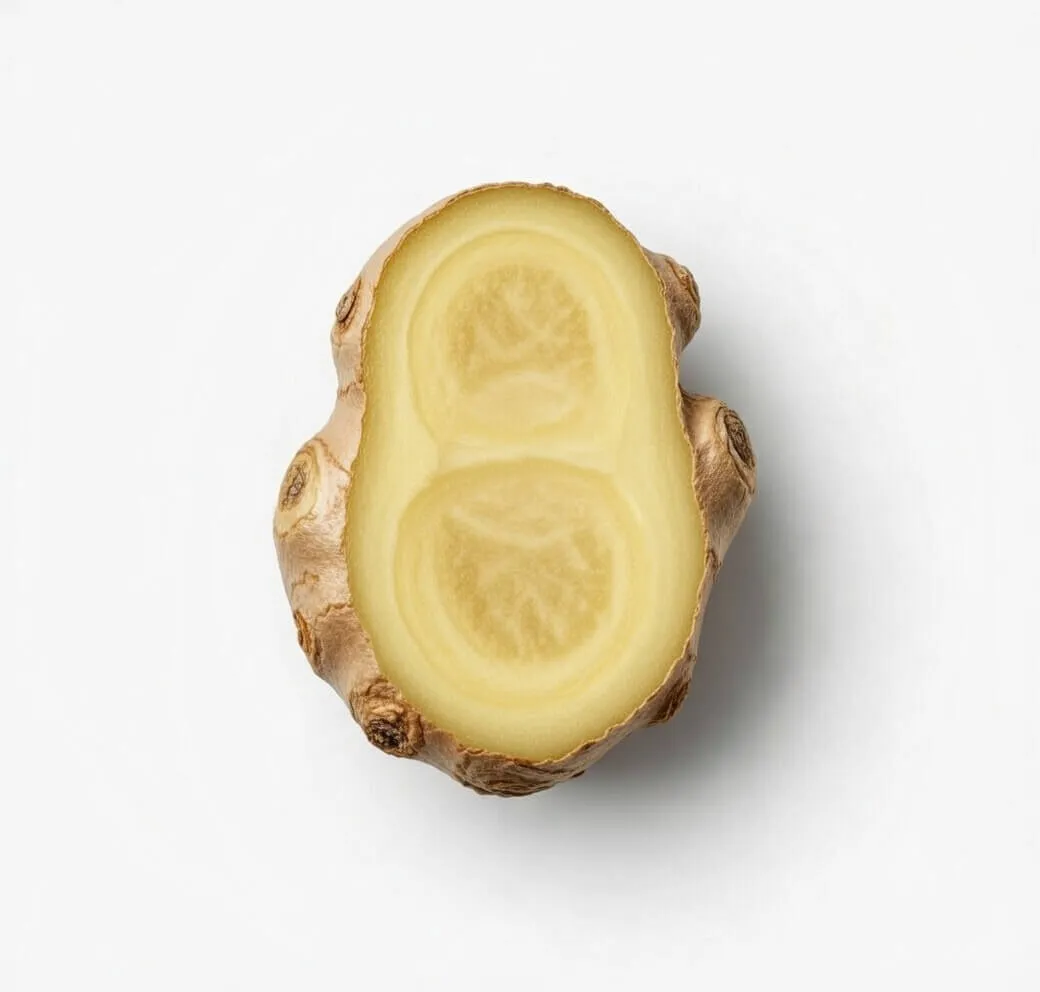
Cholesterol numbers tend to shift slowly, and most people would rather adjust everyday habits than overhaul their lives. Ginger is a gentle, familiar place to start: a systematic review and meta-analysis found that ginger supplementation significantly reduces total cholesterol, triglycerides, and LDL levels while potentially raising HDL.
Ginger is a pungent, warming root that has been a cornerstone of traditional medicine for over 5,000 years, and it is something most kitchens already have on hand. That mix of familiarity and a moderate level of evidence makes it an easy thing to fold into a routine.
What the research suggests
The summary comes from Maharlouei et al., Food Funct, 2019 — a systematic review and meta-analysis looking at ginger supplementation and blood lipids. The picture it gives is encouraging without being final: the evidence sits at a moderate level, which suggests the direction is worth taking seriously while the details stay held lightly.
Beyond cholesterol, ginger's gingerols and shogaols have antiplatelet activity and improve circulation. That is useful to know for heart and circulation support, and it is also the reason ginger deserves a little care if you take blood-thinning medication.
Ginger also partners well with garlic: combined, the cardiovascular benefits are amplified. Garlic may support cardiovascular health and healthy blood pressure, and it is rich in antioxidants and essential nutrients including selenium and manganese — a natural pairing for anyone already cooking with both.
A simple daily cup
The preparation is about as plain as it gets. Grate 2 inches of fresh ginger and simmer it in 2 cups of water for 15 minutes, then strain and add lemon and honey to taste. Slice or grate fresh root and steep it in hot water for 10–15 minutes if you prefer a quicker cup.
The suggested amount is 2–3 cups of ginger tea daily, or 1–2 grams of ginger powder. If tea does not become a habit, grated ginger can go straight into daily cooking, or into smoothies for a warming kick.
Who should check first
Ginger may interact with blood thinners and diabetes medications. Keep intake to 4 g per day, and if you take cardiovascular medications, consult your doctor before making ginger a regular part of your week.
Key takeaways
- A systematic review and meta-analysis found ginger supplementation significantly reduces total cholesterol, triglycerides, and LDL levels while potentially raising HDL.
- The evidence level is moderate — encouraging enough to try, while keeping any decisions about prescribed medication with your doctor.
- 2–3 cups of ginger tea daily, or 1–2 grams of ginger powder, is the suggested range, with an upper limit of 4 g per day.
- Ginger may interact with blood thinners and diabetes medications, so mention it to your doctor if either applies to you.
- Combined with garlic, ginger's cardiovascular benefits are amplified — garlic itself may support cardiovascular health and healthy blood pressure.
Remedies in this article
Cautions
Ginger Cholesterol Support: May interact with blood thinners and diabetes medications. Limit to 4 g per day. Consult doctor if on cardiovascular medications.
Frequently asked questions
How much ginger should I have each day?
The suggested range is 2–3 cups of ginger tea daily, or 1–2 grams of ginger powder, with intake limited to 4 g per day.
Can ginger take the place of my cholesterol medication?
No. Studies suggest ginger supplementation may support cholesterol levels, but the evidence is moderate, and ginger is not a substitute for prescribed medication. Consult your doctor before changing anything, especially if you take blood thinners, diabetes medication or cardiovascular medication.
Can I cook with ginger instead of making tea?
Yes. Alongside 2–3 cups of tea a day, grated ginger can be added to daily cooking, or blended into smoothies for a warming kick.
Why is ginger often paired with garlic?
Combined with garlic, ginger's cardiovascular benefits are amplified. Garlic may support cardiovascular health and healthy blood pressure, and it is rich in antioxidants and essential nutrients including selenium and manganese.
References
Maharlouei et al., Food Funct, 2019 — Systematic review and meta-analysis
Look up this research on PubMed
Viljoen et al., Nutr J, 2014 — Meta-analysis of 12 RCTs on nausea; Terry et al., Phytomedicine, 2011 — Meta-analysis on pain
Explore
More articles
Two daily drinks for heart and circulation support: how strong the evidence is for ginger and green tea, how to prepare them, and who might prefer which.
A calm look at what the evidence says for a garlic-onion anti-inflammatory elixir and a ginger pain relief compress, and how to pick between them.
A calm look at the lion's mane elixir: the NGF research behind it, a double-blind trial on cognitive scores, sensible daily amounts and gentle cautions.