Elderberry Syrup vs Ginger-Turmeric Shot: Which to Choose?
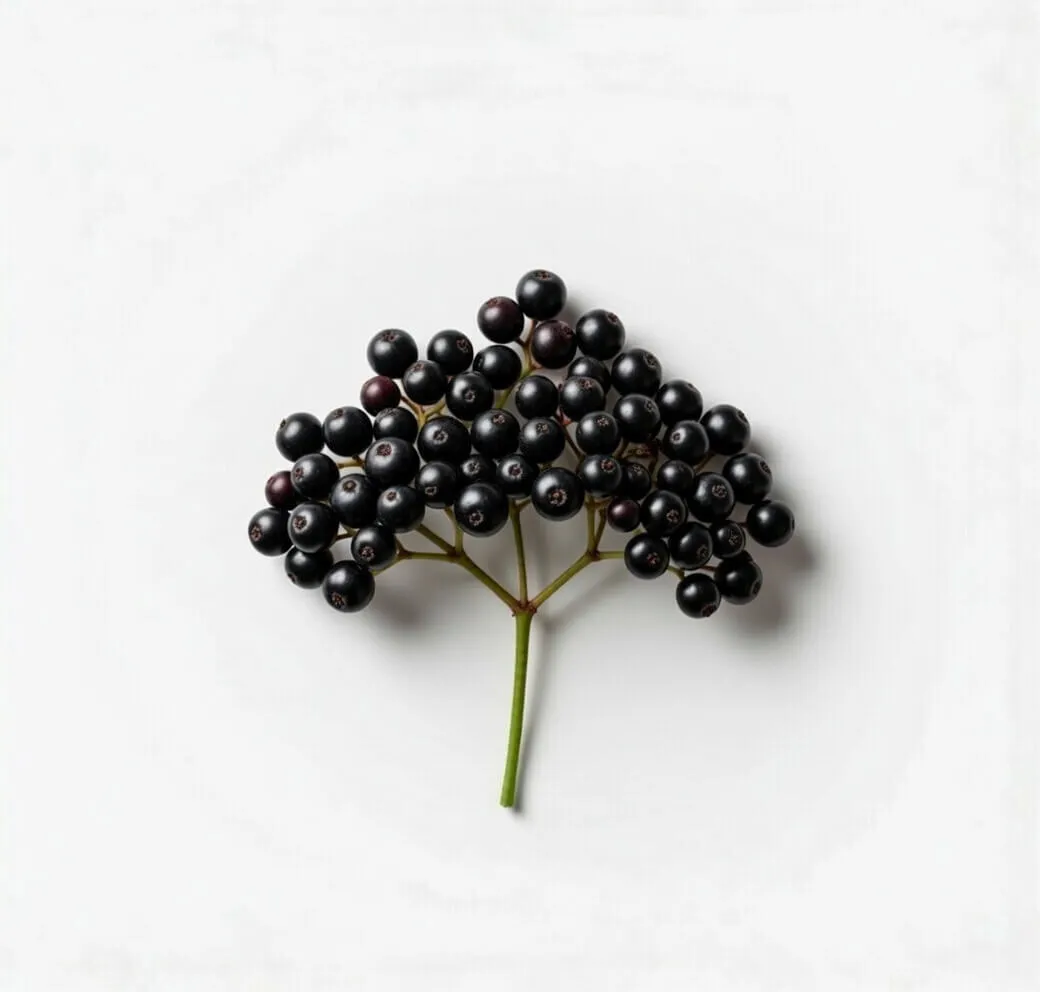
Cold season brings out the jars and the blender: a dark elderberry syrup simmering on the stove, and a bright ginger-turmeric shot for the morning. Both are simple to make at home, and both sit on the immune-support shelf of herbal practice. The research behind them, though, is not equally strong — and the cautions differ too.
Here is what studies suggest for each, how to prepare and dose them, and how to decide which one suits your household.
Elderberry Cold & Flu Syrup: the stronger evidence
Elderberry is a dark purple berry rich in vitamin C — 52 mg per cup, or 87% of the daily value — along with vitamin A and anthocyanins that have demonstrated direct antiviral activity against influenza viruses. A meta-analysis of 4 randomized studies by Hawkins et al. in Complementary Therapies in Medicine (2019) found that elderberry supplementation substantially reduced upper respiratory symptoms and cut the duration of cold and flu by an average of 2 days. On this reference, the syrup carries a Strong evidence level.
Making it is a stove-top job: simmer 1 cup dried elderberries in 3 cups water for 45 minutes, strain, cool slightly, and stir in 1 cup raw honey. Keep it refrigerated for up to 3 months. Adults take 1 tablespoon daily as a routine, or 1 tablespoon every 2–3 hours when sick; children over 1 take 1 teaspoon. Two cautions matter: never consume raw elderberries, which must be cooked, and the honey makes the syrup unsuitable for children under 1 year. Because elderberry may stimulate the immune system, use caution if you have an autoimmune condition.
Ginger-Turmeric Immune Shot: moderate evidence, more zip
This concentrated shot pairs ginger's immune-stimulating and anti-nausea properties with turmeric's curcumin. Both have shown immunomodulatory effects in clinical research, and the black pepper in the recipe matters: piperine may enhance absorption of beneficial plant compounds, and here it increases curcumin absorption by up to 2,000%. The shot as a whole sits at a Moderate evidence level, drawing on Hewlings & Kalman in Foods (2017) and Mashhadi et al. (2013).
Worth knowing: the ginger research is specific. Ginger supplements may help pregnancy-related nausea and may reduce menstrual cramp severity, but findings from supplements do not establish that a drink has the same effects. Turmeric is listed separately at a Strong evidence level — its curcumin is known for anti-inflammatory effects and it may support joint health.
To make the shot, blend 2 inches of fresh ginger, 1 inch of fresh turmeric, the juice of 1 lemon, a pinch of black pepper and 1 tablespoon of honey with ¼ cup water; strain if you prefer. Take 1 shot (2 oz) daily in the morning. It is very potent, so start with half a shot if your stomach is sensitive, and note that both turmeric and ginger may interact with blood thinners.
Who might prefer which
Choose the elderberry syrup if you want the remedy with a Strong evidence level focused specifically on cold and flu symptoms and duration. It suits households with children over 1, who take 1 teaspoon; skip it for babies under 1 because of the honey, and check with your practitioner first if you have an autoimmune condition.
Choose the ginger-turmeric shot for a warming morning drink if you are comfortable with Moderate evidence. It is less suited to very sensitive stomachs and to anyone on blood thinners. If you are pregnant and hoping for nausea relief, note that the ginger findings come from supplements, not from a shot.
Key takeaways
- Elderberry syrup carries a Strong evidence level: a meta-analysis of 4 randomized studies found elderberry supplementation substantially reduced upper respiratory symptoms and shortened cold and flu duration by an average of 2 days.
- Elderberries must be cooked, and a honey-based syrup is not for children under 1; children over 1 take 1 teaspoon.
- The ginger-turmeric shot sits at Moderate evidence; the black pepper in it increases curcumin absorption by up to 2,000%.
- Both turmeric and ginger may interact with blood thinners, and the shot is very potent — start with half a shot if your stomach is sensitive.
Remedies in this article
Cautions
Elderberry Cold & Flu Syrup: Never consume raw elderberries — they must be cooked. Not suitable for children under 1 year due to honey. May stimulate immune system — use caution with autoimmune conditions.
Ginger-Turmeric Immune Shot: Very potent — start with half a shot if you have a sensitive stomach. Both turmeric and ginger may interact with blood thinners.
Frequently asked questions
Can children take either remedy?
For elderberry syrup, 1 teaspoon is listed for children over 1 year, and it should not be given to children under 1 because of the honey. No children's dose is listed for the ginger-turmeric shot.
Why does the shot include black pepper?
Black pepper's piperine may enhance absorption of nutrients and beneficial plant compounds; in this shot it increases curcumin absorption by up to 2,000%.
How long does the syrup keep?
Stored in the refrigerator, the finished syrup keeps for up to 3 months.
References
Hawkins et al., Complement Ther Med, 2019 — Meta-analysis of 4 RCTs
Look up this research on PubMed
Hewlings & Kalman, Foods, 2017; Mashhadi et al., Int J Prev Med, 2013
Look up this research on PubMed
Hawkins et al., Complement Ther Med, 2019 — Meta-analysis of 4 RCTs on cold & flu symptoms
Look up this research on PubMed
NIH NCCIH, Ginger, February 2025
Look up this research on PubMed
Daily et al., J Med Food, 2016 — Meta-analysis of 8 RCTs on osteoarthritis; Hewlings & Kalman, Foods, 2017 — Review of anti-inflammatory effects
Explore
More articles
A meta-analysis of 4 randomized studies suggests elderberry syrup may shorten colds and flu. How to make it, dose it, and stay safe.
A warm bedtime drink of simmered figs and milk — what traditional use and preliminary evidence say about soothing a dry, tickly night-time cough.
Compare moderate evidence for calendula salve and carrot skin glow, with practical uses, cautions and who may prefer each.